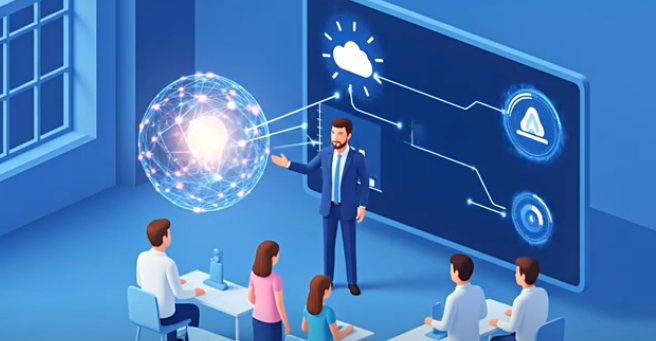
Most people use SaaS every day without realizing it.
When you send an email, store files in the cloud, book a meeting, or even shop online, there is a high chance that a SaaS platform is working in the background. In 2026, Software as a Service (SaaS) is no longer just a business tool—it has become the invisible infrastructure of the entire digital economy.
Unlike traditional software that sits on a device, SaaS lives in the cloud, constantly updating, learning, and scaling in real time. It powers everything from small online stores to global enterprise systems without users even noticing its complexity.
Why SaaS Feels “Invisible” but Powerful
The most interesting thing about modern SaaS is that it is designed to disappear from user attention.
Users don’t think about servers, updates, or system maintenance. They just log in and work.
Behind the scenes, SaaS platforms handle:
- Data storage and synchronization
- Real-time collaboration between users
- Security monitoring and encryption
- Performance optimization
- Automatic feature updates
This “invisible layer” is what makes modern digital tools feel fast, simple, and seamless.
The Shift From Software Ownership to Software Access
In the past, businesses bought software once and installed it forever. Today, that model is almost gone.
Now, companies subscribe instead of owning.
This shift has completely changed how businesses operate:
Old Model:
- Expensive upfront licenses
- Manual updates
- Limited flexibility
- Local device installation
SaaS Model:
- Monthly or yearly subscriptions
- Continuous updates
- Scalable usage
- Cloud-based access anywhere
This transition has made advanced technology accessible even to small startups and solo entrepreneurs.
AI Has Quietly Changed SaaS Forever
One of the biggest changes in SaaS 2026 is the deep integration of artificial intelligence.
But unlike flashy AI apps, most AI in SaaS works quietly in the background.
AI now helps SaaS platforms:
- Predict user behavior
- Automate repetitive workflows
- Detect security threats in real time
- Optimize business decisions
- Personalize user experiences
For example, a marketing SaaS tool might automatically adjust campaigns based on performance, while a CRM system predicts which customers are likely to buy again.
This is not just automation—it is adaptive intelligence.
SaaS Is Becoming the “Operating System” of Businesses
Modern companies no longer rely on a single software tool. Instead, they use entire ecosystems of connected SaaS platforms.
A typical business now runs on:
- Communication SaaS (chat, email, video calls)
- Finance SaaS (invoicing, accounting, payments)
- Marketing SaaS (ads, SEO, automation)
- Operations SaaS (project management, HR systems)
- Security SaaS (data protection, monitoring)
Together, these tools function like a digital operating system for businesses.
Without SaaS, most modern companies would struggle to function efficiently.
The Rise of Micro-SaaS and Hyper-Specialized Tools
Another major trend in 2026 is the growth of Micro-SaaS.
Instead of large all-in-one platforms, developers now build small tools that solve very specific problems.
Examples include:
- A SaaS tool that only tracks TikTok analytics
- A platform for automating podcast editing
- A micro app for freelance invoice management
- A niche CRM for real estate agents
These lightweight SaaS tools are often cheaper, faster, and more focused than traditional enterprise software.
Why SaaS Keeps Growing Faster Than Traditional Software
There are several reasons SaaS continues to dominate the tech industry:
1. Zero Installation Barrier
Users can start instantly without setup.
2. Continuous Improvement
Features are updated automatically in the cloud.
3. Global Accessibility
One platform works for users worldwide.
4. Lower Risk for Businesses
Companies can cancel or upgrade anytime.
5. Integration Ecosystem
SaaS tools easily connect with each other via APIs.
This combination makes SaaS nearly impossible to replace in modern digital workflows.
The Future: SaaS Without Interfaces
The next stage of SaaS evolution is already starting.
Instead of logging into dashboards and clicking buttons, users will interact with SaaS through:
- Voice commands
- AI assistants
- Automated background workflows
- Predictive task execution
In the future, SaaS may not even feel like software at all—it will behave like a digital assistant that runs quietly in the background.
Conclusion
SaaS in 2026 is no longer just a technology trend—it is the invisible foundation of modern life and business.
It powers communication, finance, marketing, security, and productivity without most users even noticing. With the rise of AI, automation, and micro-SaaS systems, this ecosystem will only become more intelligent and integrated.
The real revolution is not just SaaS itself, but how completely it has disappeared into everyday digital life.